


















-
VIDEOS: REPUBLICAN.TV
-
-
Project P-K4

Click for more information -
Global Perspectives on Good Governance
-
-
Comments
- Sino-US relations & the Asia Pacific | The Temasek Reveal on Sino-US relations & the Asia Pacific
- Grassroots work as the key to winning minority group support | The Temasek Reveal on Grassroots work as the key to winning minority group support
- Daily SG: 11 Jan 2012 « The Singapore Daily on Grassroots work as the key to winning minority group support
- Magos Biologis on Should we as human beings be aggressive?
- Secularism. How Far Should It Go? - Page 3 on Is Singapore a secular nation?
- 新愚民 on 官委议员vs政党选票:包容还是竞争的民主?
- Daily SG: 06 Jan 2012 « The Singapore Daily on 官委议员vs政党选票:包容还是竞争的民主?
- Press Conference on Ministerial Salary Review | The Temasek Reveal on Press Conference on Ministerial Salary Review
- 官委议员vs政党选票:包容还是竞争的民主? | The Temasek Reveal on 官委议员vs政党选票:包容还是竞争的民主?
- New Gulf War to mark New Year? | The Temasek Reveal on New Gulf War to mark New Year?
- Marvin on ComfortDelgro’s Strategic Calculus
- Adonis R. Perillo on US Relations in the South China Sea
- fpc on 2011年风云人物:阿裕尼选民
- cars on GRC effects: George Yeo out, Tin Pei Ling in
- Sgcynic on 2011年风云人物:阿裕尼选民
Tags
Creative Commons
Our articles and photographs are available to the public under Creative Commons. Click the Creative Commons logo for more information.

Main Stories
-
Grassroots work as the key to winning minority group support
It is a fallacy to assume that political rhetoric is sufficient to win support of targeted minority groups
-
New Gulf War to mark New Year?
Amidst festive cheers as the world transitions from 2011 to 2012, war is brewing in the Middle East.
-
The Racism Episode of the SMRT Saga
The point in highlighting racialist comments is not to engage in a ritual of witch-hunting, whereby you set your enemy on fire out of anger and then go home feeling balance in the world is restored.
-
Governance and Operations at SMRT
Senior Management should be aware that long intervals between failures can give a false sense of security and be wary of short-term pressures.
-
The Perpetual Evolution of Human Rights
Human Rights evolves with the passage of experience and should be constantly redefined through individual action and societal engagement.
-
Fret not, Britain has yet to isolate itself
Nick Clegg has lashed out against David Cameron over the apparent isolationist stance the Prime Minister took on the new revisions to the Lisbon Treaty.
-
ComfortDelgro’s Strategic Calculus
The success of this revised price structure is highly dependent on elasticity of demand for taxis services.
-
The Same Old Same Old
In this nation, the political landscape spun the same old tales. The Merlion is still “alive” despite being struck by lightning twice.
-
On Greek Sovereign Debt
Sovereign debt is not risk free. The real payoff may differ from the nominal promise.
-
Should we as human beings be aggressive?
With the absence of aggression as a central feature of human behavior, the gains would most definitely outweigh the losses as there would be an end to violence and conflict leading to a more open minded society
-
Macroeconomic Flexibility vs Single Currency
A comparison between Singapore’s approach on monetary policy and that of the European Union.
-
Liberty in the Social Media and a Practice Target for Dialogue
Negative or insensitive remarks do not make a pleasant start for a dialogue. The worst that we can do is to magnify any isolated cases.
新亚共和网 | 中文版 (Chinese Edition)
-
官委议员vs政党选票:包容还是竞争的民主?
国会秘书处的新闻稿,说有50人报名,但选民根本不知道他们的背景,但是一两个月后,他们之中的9人,就这样出现在神圣的国会大堂。
-
2011年风云人物:阿裕尼选民
当然也应该包括20年后才亮剑的刘程强和工人党团队。
-
乌龙的政治秀 网上的罗生门 或许越来越普遍
这就是不听老人言的结果。老人不是说了吗,在新加坡不懂英文英语是不行的。
-
在历史感情和功利现实下,台星关系渐行渐远
新台关系是否出现变数,改善,在很大程度上要看台湾的积极性,台湾经济的进一步提高。
-
地铁事件的机关算尽,垄断到底,和替代无路
政府怎么会没有想到‘机关算尽和垄断到底’的结果是会把自己陷于‘替代无路’的尽头。
-
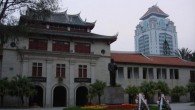
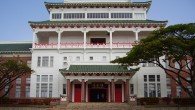
从新马大众书局的差异,看厦门大学落脚马来西亚
世界上的事,真的很难料,谁会想到中国的大学,竟然能够跨出国门,到世界各地开分校。
-
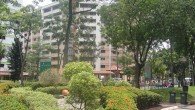
都是钱作怪,从电梯翻新,看政府如何面对过去的失策
不能因为以前是公共利益,现在组屋卖給你,是私人利益,提供电梯服务給少数人也是私人利益。
-
老弱残兵雷声大,收拾失地雨点小,谁在为正义而战?
正如坊间传言的,行动党将会派老弱残兵来充充面子。前部长,前副总理,前国会议长,再加一个前部长和新兵,凑成5人,前往“诺曼底“应战。
-
双语双文化,一个钱字推得动吗?政府单方面推得动吗?
要培养双语双文人才,有钱未必推得动,政府单方面领导更无法推得动。
-
不满要放弃新加坡公民权被拒 在港出世少年申请司法检讨
距离办理国民服役登记手续还有一年,在香港出世的少年要放弃新加坡公民权。可是,移民与关卡局以他未满21岁为由,拒绝受理。
-
广告促销限制能起效用吗?
清者自清,对着这个已知道的事实,有些人会为之所动,有些人坚守本分。因此,赌场广告促销的限制真能起效用吗?
-
如果南洋大学延迟出世50年,今天的评语是不是有所不同
这真是风水轮流转,50年后,局势改变了。评语竟然可以相差180度。
External Articles
-
There’s enough real racism in Singapore – TOC needn’t cry wolf
Seng Han Thong’s slip could have been due to political naivety rather than racism. There is enough genuine racism in the country; TOC doesn’t help by crying wolf.
-
Behaving better online
A Code of Internet Conduct should improves trust and encourage discernment.
-
How to leave the Euro?
Default at Greece’s initiative, by contrast, would allow Greece to influence its destiny.
-
CIA Tracks Revolt by Tweet, Facebook
The Open Source Centre started focusing on social media after watching the Twitter-sphere rock the Iranian regime during the Green Revolution of 2009.
-
Enter a new era of politics
The departure from the Cabinet of the man who has had a hand in almost everything in Singapore for 46 years seems to have jolted people and politics into action.
-
Tomorrow’s university: Free, online, everywhere
The traditional university serves a fortunate few, inefficiently, with a business model built on exclusivity.
-
Goh Chok Tong, George Yeo & LKY step down from PAP CEC
Six CEC members step down; Comrades Lee Kuan Yew and Goh Chok Tong to be Honorary Past Secretaries-General.
-
PAS, Hudud and New Labour: Why political parties ought to grow up
Vainglorious talk and boasting about moral politics, grand visions and Hudud law merely add to the theatricality of Malaysia’s political culture.
-
MUIS: Price of Hari Raya Haji sacrificial rites up by 18%
Sheeps will be offered at S$443.50 each while goats will be offered at S$395.00 each.


